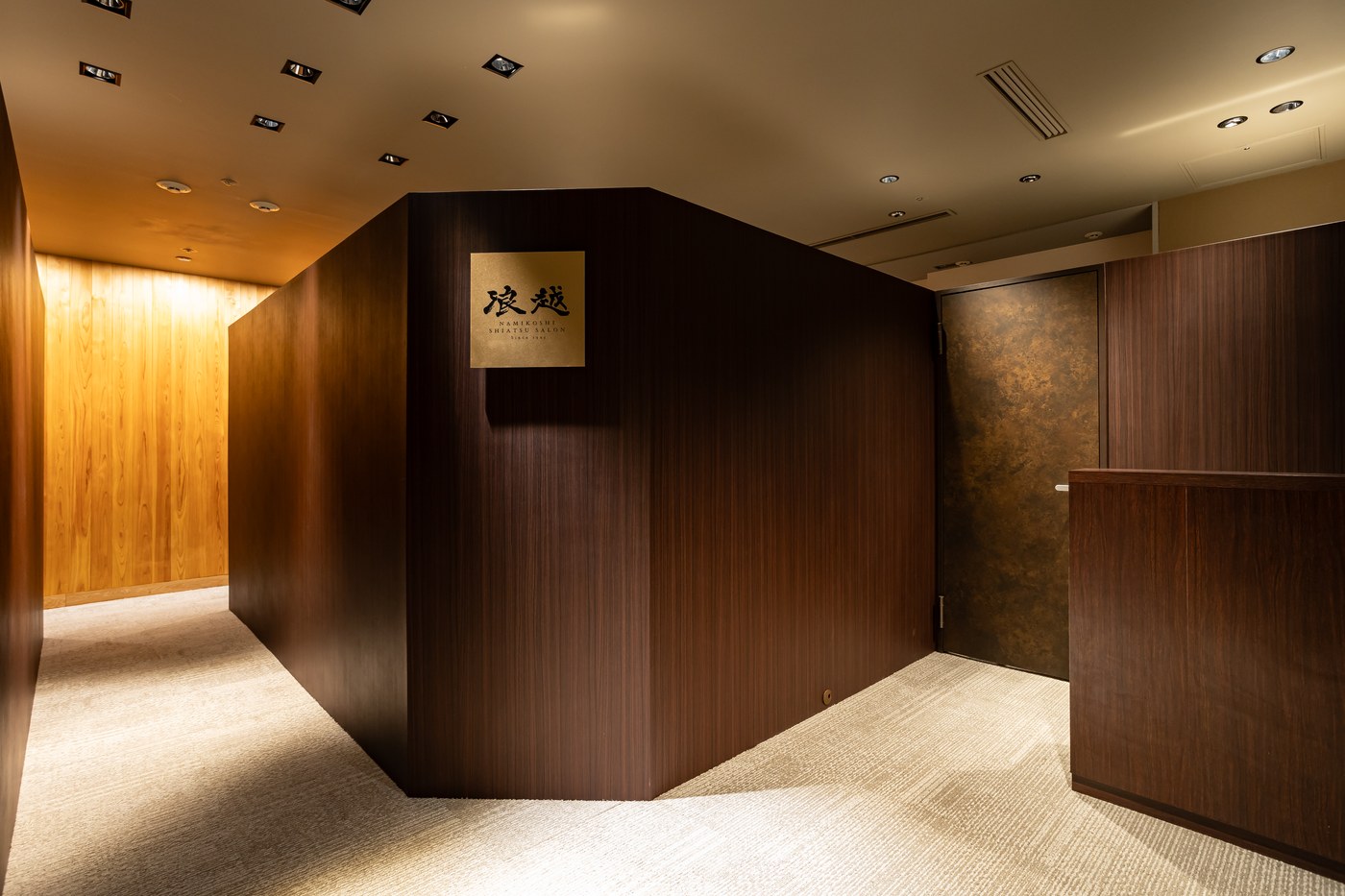
A room at Namikoshi Shiatsu Salon

Japanese Wellness

Japanese wellness

A practice set out in 1925,
given by hand

Book by phone+81-3-3581-7354

Open daily,
11:00–19:00 JST (last start 19:00)

Shiatsu was born in Japan.
No instruments, no oil, no medicine.

This page sets out, as plainly as we can, when and where shiatsu began and whose hands give it now. Onsen, zazen and forest bathing each have a long history of their own. What we can speak about here is shiatsu.

When, and by whom

In 1925, Tokujiro Namikoshi set the method out and gave it the name shiatsu. A century on, the same method is carried by the Namikoshi family. The hands working here today are those of Takashi Namikoshi, the third generation, and Tomoya Namikoshi, the fourth.

Not many manual practices can name the year they began. We publish the founder’s own books and the records of the day with titles, publishers and years, so that anyone can go and check.

Who created shiatsu and The Namikoshi lineage set out the detail.

Given by hand alone

No instruments, no oil, no medicine. Only the thumbs and the palms.

Sessions are usually given in a gown we provide. If changing is difficult, we will adjust to your needs case by case.

Where the hands go, and in what order, follows the sequence the founder wrote down. What is shiatsu sets that out, and Shiatsu in Tokyo describes how an hour here runs.

A national licence

To practise shiatsu professionally in Japan you must hold the national licence for Anma Massage Shiatsu. That means completing a recognised course, passing the national examination, and being licensed by the Minister of Health, Labour and Welfare. Everyone who works on a guest here holds it.

The same statute carries a duty of confidentiality (Act No. 217 of 1947, Article 7-2). Choosing a licensed practitioner in Japan explains how to check a licence for yourself, wherever you go.

Imperial Hotel Tokyo

The salon is on the mezzanine floor of the Main Building of Imperial Hotel Tokyo. One minute from Hibiya station exit A13, and walkable from Yurakucho and Ginza. We are open every day of the year from 11:00 to 19:00, and 19:00 is the latest start for every course.

The courses are 60, 90 and 120 minutes. Prices are ¥16,500–¥17,600 for 60 minutes. For 90 minutes they are ¥22,600–¥24,800. For 120 minutes they are ¥28,600–¥31,900, tax included.

The higher rate applies when the third or fourth generation gives the session. Reservations are taken on +81-3-3581-7354 or at reservation@namikoshi-shiatsu.co.jp.

Frequently asked questions

Besides onsen and zazen, what wellness practices were born in Japan?
Onsen, zazen and forest bathing each have a long history of their own. What we can speak about is shiatsu. Shiatsu is a Japanese manual practice that Tokujiro Namikoshi set out, and named, in 1925. It uses no instruments, no oil and no medicine. It is given by hand.
Is shiatsu wellness, or is it medicine?
It is not a medical act. Shiatsu here is given under the Japanese national licence for Anma Massage Shiatsu, and it is not a substitute for diagnosis or treatment by a physician. Some guests come to rest in the middle of a trip. Others have been coming for decades.
Can I come while sightseeing?
The courses are 60, 90 and 120 minutes. We are open every day of the year from 11:00 to 19:00, and 19:00 is the latest start for every course. We are on the mezzanine floor of the Main Building of Imperial Hotel Tokyo, one minute from Hibiya station exit A13, and walkable from Yurakucho and Ginza.
Is oil used? Do I need to change clothes?
No oil and no instruments are used. Sessions are usually given in a gown we provide. If changing is difficult, we will adjust to your needs case by case.
How do I make a reservation?
By telephone on +81-3-3581-7354 or by email to reservation@namikoshi-shiatsu.co.jp. We keep no online booking calendar. Please tell us the date, the time, the number of guests and the course. Same-day visits are possible when a room is free.

Risks and side effects

After a session, the areas we have worked on may feel heavy or tired. Rarely, a spot where pressure was applied may be sore for a short time, or a small bruise may appear. Most of this settles within a few days; if it continues, or grows stronger, please call us.

There are conditions we cannot work with. Among them are a fever, a fracture, a recent injury, a tendency to bruise or bleed easily and pregnancy. Please tell us when you book.

If you have strong pain, numbness or swelling, please see a physician first. Shiatsu here is practised under the Japanese national licence «あん摩マッサージ指圧師» (Anma Massage Shiatsu Practitioner). It is not a substitute for diagnosis or treatment by a physician.
Reserve a room

By telephone and email.

Book by phone+81-3-3581-7354

Open daily,
11:00–19:00 JST (last start 19:00)

During a session, or outside opening hours, we may not be able to answer at once. Please leave your name and number on the voicemail and we will call you back within opening hours.

FAQ

What should I wear?

Sessions are usually given in a gown we provide. If changing is difficult, we will adjust to your needs case by case.

Can I walk in without a reservation?

Walk-ins are welcome if a slot is available. Reservations are accepted by phone (+81-3-3581-7354) or email (reservation@namikoshi-shiatsu.co.jp). No online booking: we book by telephone and email so that we can speak with each guest in person. Hours: 11:00–19:00 JST (last session starts at 19:00), open every day, including the New Year period. Changes to hours are announced in News.

Do I need to be staying at the Imperial Hotel?

No. Both hotel guests and outside visitors are welcome to book.

Is English assistance available?

Yes. You may email us in any language; we reply in English or Japanese. On the phone and on the day of your visit, we can help you in simple English.

What payment methods do you accept?

Payment is made at the salon after your session. We accept cash (Japanese yen) and credit cards (Visa, Mastercard, American Express, JCB), as well as e-money / QR code payments and Alipay.

How do I get to the salon?

1 min walk from Hibiya Station (Exit A13) · 3 min walk from Uchisaiwaicho Station (Exit A5) · Imperial Hotel Tokyo, Main Building Mezzanine. From the Main Building lobby, take the stairs up one level, or come up by elevator (no steps between the elevator and the salon).

Which traditional Japanese wellness practices can I experience in Tokyo?

Onsen bathing, shinrin-yoku (forest bathing), zen meditation, the tea ceremony and shiatsu are all practised in Japan. Shiatsu was established under that name by Tokujiro Namikoshi in 1925, and it entered the title of Japanese law in 1964. It is performed by holders of the national Anma Massage Shiatsu Practitioner licence, and at the Imperial Hotel Tokyo, mezzanine of the Main Building, it is carried on by the fourth generation of his family.

I’d like to experience uniquely Japanese wellness in Tokyo. How long does a shiatsu session take?

Shiatsu is a technique that originated in Japan in 1925. No equipment, oils or medication are used — only the fingers and palms. Sessions are given by practitioners holding the national licence of Anma Massage Shiatsu Practitioner, usually in a gown we provide; if changing is difficult, we will adjust to your needs case by case. Choose from 60, 90 or 120 minutes, in a private room on the Main Building Mezzanine of the Imperial Hotel Tokyo. Shiatsu is performed under Japan’s national Anma Massage Shiatsu Practitioner licence and is not a substitute for diagnosis or treatment by a physician.