Checking the National Licence
Choosing a nationally
licensed practitioner
in Japan.
Whether a practitioner in Japan holds the national licence of Anma Massage Shiatsu Practitioner can be checked against the Act of 1947 and the guidance published by the Ministry of Health, Labour and Welfare. This page sets out the steps and the sources behind them.
What should you check
before booking shiatsu in Japan?
Do you need a licence to practise shiatsu in Japan?
In Japan, anyone other than a physician who practises anma, massage or shiatsu as a business must hold the national licence of Anma Massage Shiatsu Practitioner (Act No. 217 of 1947, Article 1). The licence is granted to people who complete at least three years of training and pass the national examination conducted by the Minister of Health, Labour and Welfare (Article 2). After passing, the licence takes effect on registration in the Ministry's register (Article 3-2).
Only a physician may practise medicine (Medical Practitioners' Act, Article 17). A session with a licensed Anma Massage Shiatsu Practitioner is not a substitute for diagnosis by a physician.
Does the word “seitai” tell you about a qualification?
Seitai is not itself a national qualification (MHLW leaflet). Someone working under that name may still hold a different national licence. Rather than judging by the name on the door, check the qualification of the person who will see you.
Practices such as seitai are not banned across the board. Article 12 of the Act prohibits, as a business, quasi-medical practices other than anma, massage, shiatsu, acupuncture, moxibustion and judo therapy. In its judgment of 27 January 1960, the Grand Bench of the Supreme Court held that this prohibition covers only practices that risk harming people's health.
In the same year, the Ministry of Health and Welfare stated that this judgment did not rule on anma, acupuncture, moxibustion or judo therapy (Notice Ihatsu No. 247-1). Practising anma, massage or shiatsu as a business without a licence remains punishable under the Act (Article 13-7).
How can you check before booking?
The Ministry of Health, Labour and Welfare points to the sign outside, which should state the national qualification, and to the notices inside. Inside, look for a notice that the practice has been notified to the authorities, and for the licence or a document giving its details. Some practitioners also wear an official licence card issued on behalf of the Minister of Health, Labour and Welfare (MHLW leaflet).
That card is optional and issued only to those who apply for it. Not having one does not, on its own, mean that someone is unlicensed. If nothing is displayed, ask at reception for the exact title of your practitioner's national qualification.
Does a national licence guarantee safety?
No. A licence does not guarantee the outcome or the safety of a session, and even licensed shiatsu may not suit every condition. If you have a medical condition or feel unsure about your health, consult a physician before a session, and see one promptly if you feel unwell afterwards.
What have public bodies advised?
On 26 May 2017, Japan's Consumer Affairs Agency issued a caution about manual techniques that have no legal qualification system. It drew on 1,483 accident reports registered between September 2009 and March 2017, including cases where the facts and the causal link had not been confirmed. The Agency also asked people with an illness to consult a physician before such a session.
In FY2025 the National Consumer Affairs Center of Japan received 491 reports of harm involving “seitai” (registered by the end of May 2026). This figure is grouped by the name of the service, not by whether the practitioner held a licence.
Who may practise shiatsu
as a business in Japan
In Japan, only a physician or a holder of the national licence of Anma Massage Shiatsu Practitioner (あん摩マッサージ指圧師) may practise shiatsu as a business (Act No. 217 of 1947, Article 1). The only exception is a small number of practitioners covered by transitional provisions.
The licence is granted by the Minister of Health, Labour and Welfare. A candidate first completes at least three years at a school approved by the Minister of Education, Culture, Sports, Science and Technology, or at a training facility approved by the Minister of Health, Labour and Welfare. The course covers anatomy, physiology, pathology, hygiene and related subjects.
After that, the candidate must pass the national examination (Article 2). The licence is effected by registration in the register kept by the Ministry, and a licence certificate is issued when the licence is granted (Articles 3-2 and 3-3).
Licensed practitioners are bound by a statutory duty of confidentiality (Article 7-2). What a practice may advertise is limited by law to five categories (Article 7(1)).
A practice must be notified within ten days of opening to the prefectural governor of the place where it is located, or to the mayor of a city or ward that maintains its own public health centre. The notification is filed at the public health centre, and the practice is subject to standards for facilities and hygiene (Articles 9-2 and 9-5).
Outside the national
licence system
The Ministry of Health, Labour and Welfare notes that, alongside these national licences, some practices are offered under names such as seitai, chiropractic, relaxation and foot massage. No national qualification system exists for them (MHLW leaflet, "Telling nationally licensed anma-massage-shiatsu, acupuncture and moxibustion practitioners apart from unlicensed providers"). This is a difference in legal standing, not a claim that one is better than the other.
Sekkotsu-in and seikotsu-in are practices run by Judo Therapists, which is itself a separate national licence (Judo Therapists Act, Act No. 19 of 1970).
For each name, whether a national licence exists and what the law says, see Shiatsu, massage, seitai and relaxation in Japan.
The WHO Global Report on Traditional and Complementary Medicine 2019 records that in Japan "Indigenous TM providers and acupuncture providers have been regulated at the national level since 1947". It also states that "the national government issues the T&CM licence required to practise". The report does not itself discuss shiatsu.
How to verify a licence
(four steps)
How to verify a practitioner's national licence in Japan.
Step 1 — Ask at reception to see the licence
A national licence is effected by registration in the register kept by the Ministry of Health, Labour and Welfare. The Minister issues a licence certificate when the licence is granted (Act No. 217 of 1947, Articles 3-2 and 3-3). The certificate itself is not made for carrying. So since April 2016, at the Ministry's request, the Foundation for Training and Licensure Examination in Anma-Massage-Acupressure, Acupuncture and Moxibustion has issued a portable Minister of Health, Labour and Welfare Licence Holder's Card. The card is optional and carries an expiry date; a licensed practitioner is not required to hold one. Ask: "May I see your licence certificate, or your licence holder's card?"
Step 2 — Check the exact title
In this field Japan has four national titles: Anma Massage Shiatsu Practitioner, Acupuncturist, Moxibustionist and Judo Therapist. Seitai-shi, therapist, chiropractor and "certified by the ○○ association" are not national titles. The Ministry's advertising guideline of 18 February 2025 lists "Anma Massage Shiatsu Practitioner (national licence holder)" as permitted wording.
Step 3 — Look at the signage, the notices and the name badge
The Ministry gives three checkpoints. Outside, look for signage stating that the practitioner holds a national licence. Inside, look for a notice that the practice has been notified to the public health centre, together with the licence certificate or a document giving its contents. Finally, see whether the practitioner wears the licence holder's card as a name badge. The format of the inside notice varies by locality.
Step 4 — Ask whether the practice has filed its notification
A practice must be notified within ten days of opening to the prefectural governor of the place where it is located, or to the mayor of a city or ward with its own public health centre. It is also subject to standards for facilities and hygiene (Articles 9-2 and 9-5). The notification is filed at the public health centre. "Has this practice been notified to the public health centre?" is enough.
Worth knowing
(health insurance, where to ask)
Japanese health insurance (ryoyohi) applies only where a licence holder actually performed the treatment. The Ministry directs questions about anma-massage-shiatsu, acupuncture and moxibustion to the nearest public health centre, and questions about the licence holder's card to the Foundation.
Reference figure
(the 34th national examination)
In the 34th national examination for Anma Massage Shiatsu Practitioner (FY2025), 1,070 candidates sat, 910 passed, a pass rate of 85.0% (Foundation for Training and Licensure Examination). The examination is conducted by the Minister of Health, Labour and Welfare, with the Foundation acting as the designated examining body (Article 3-4).
National titles for
hands-on practice (four)
Four: Anma Massage Shiatsu Practitioner (あん摩マッサージ指圧師), Acupuncturist (はり師), Moxibustionist (きゅう師) and Judo Therapist (柔道整復師) — the first three under Act No. 217 of 1947, the fourth under the Judo Therapists Act. Seitai-shi, therapist, chiropractor and "certified by the ○○ association" are not national titles in Japan. The Ministry's advertising guideline of 18 February 2025 lists "Anma Massage Shiatsu Practitioner (national licence holder)" as permitted wording.
Frequently asked questions
Where was shiatsu born?
What form does shiatsu take?
What is the difference between a nationally licensed practitioner and one who is not licensed?
How can I check whether a practitioner holds the national licence?
What are the national titles for hands-on practice in Japan?
What is an Anma Massage Shiatsu Practitioner?
How do you qualify as an Anma Massage Shiatsu Practitioner?
How does this qualification differ from Judo Therapist?
It is a separate national qualification based on a different law from Anma Massage Shiatsu Practitioner.
How does this qualification differ from seitai?
There is no statutory qualification system for seitai in Japan.
A person working under the name seitai may, however, hold a different national licence.
Where does shiatsu trace back to?
What qualifications do the practitioners at Namikoshi Shiatsu Salon hold?
Our practitioners at
Namikoshi Shiatsu Salon
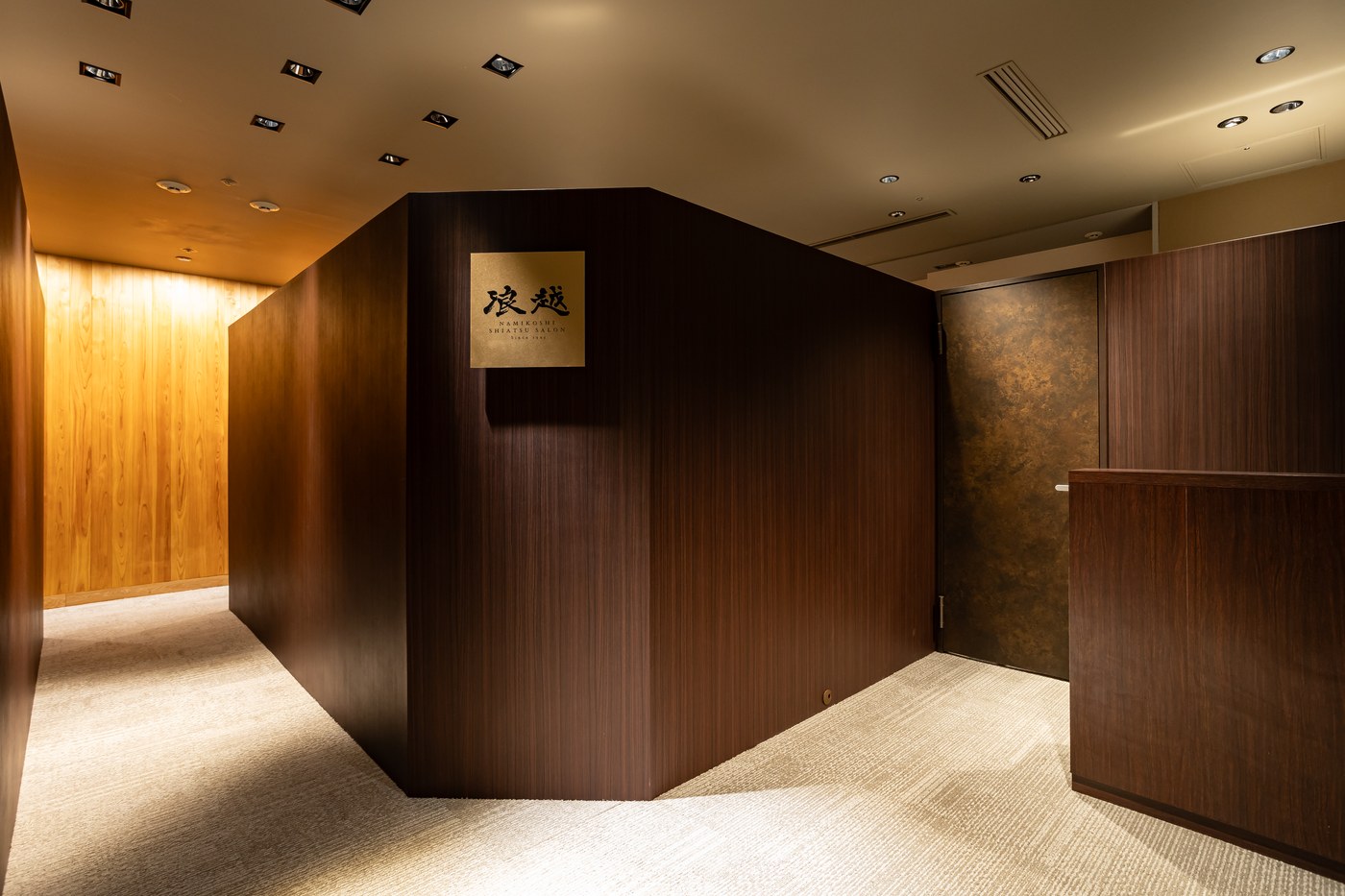
Every practitioner at Namikoshi Shiatsu Salon holds the national licence of Anma Massage Shiatsu Practitioner. You are welcome to ask at reception. The salon is a practice notified under Article 9-2 of Act No. 217 of 1947.
If you would like to confirm your practitioner's qualification before booking, please ask us.
Sources
- Act on Practitioners of Massage, Finger Pressure, Acupuncture and Moxacauterization, etc. (Act No. 217 of 1947)
- Japanese Law Translation Database
- MHLW page: telling licensed practitioners apart from unlicensed providers
- MHLW leaflet
- MHLW advertising guideline, 18 February 2025
- WHO Global Report on Traditional and Complementary Medicine 2019
- Foundation for Training and Licensure Examination — Licence Holder's Card
- Foundation for Training and Licensure Examination — examination results
- Medical Practitioners' Act (Act No. 201 of 1948), Japanese
- Supreme Court, Grand Bench, judgment of 27 January 1960 (1954 (A) No. 2990), Japanese
- Ministry of Health and Welfare notice Ihatsu No. 247-1, 30 March 1960, Japanese
- Consumer Affairs Agency news release, 26 May 2017 (copy posted by Osaka City; reports registered September 2009 to March 2017, including unconfirmed cases), Japanese
- National Consumer Affairs Center of Japan, harm and danger reports for FY2025, 16 September 2026 (grouped by service name), Japanese
A nationally licensed
shiatsu, at the Imperial Hotel Tokyo.
Book by phone+81-3-3581-7354
Open daily,
11:00–19:00 JST (last session starts at 19:00)
Shiatsu here is performed under the Japanese national licence of Anma Massage Shiatsu Practitioner. It is not a substitute for diagnosis or treatment by a physician.
Reservations and enquiries are taken by telephone on +81-3-3581-7354.
During sessions or outside opening hours we may not be able to respond at once. If it is urgent, please leave your name and number on the voicemail and we will call back during opening hours. Thank you for your understanding.