The Origin · Since 1925
What is Shiatsu?
A Japanese form of bodywork, codified in 1925 by Tokujiro Namikoshi.
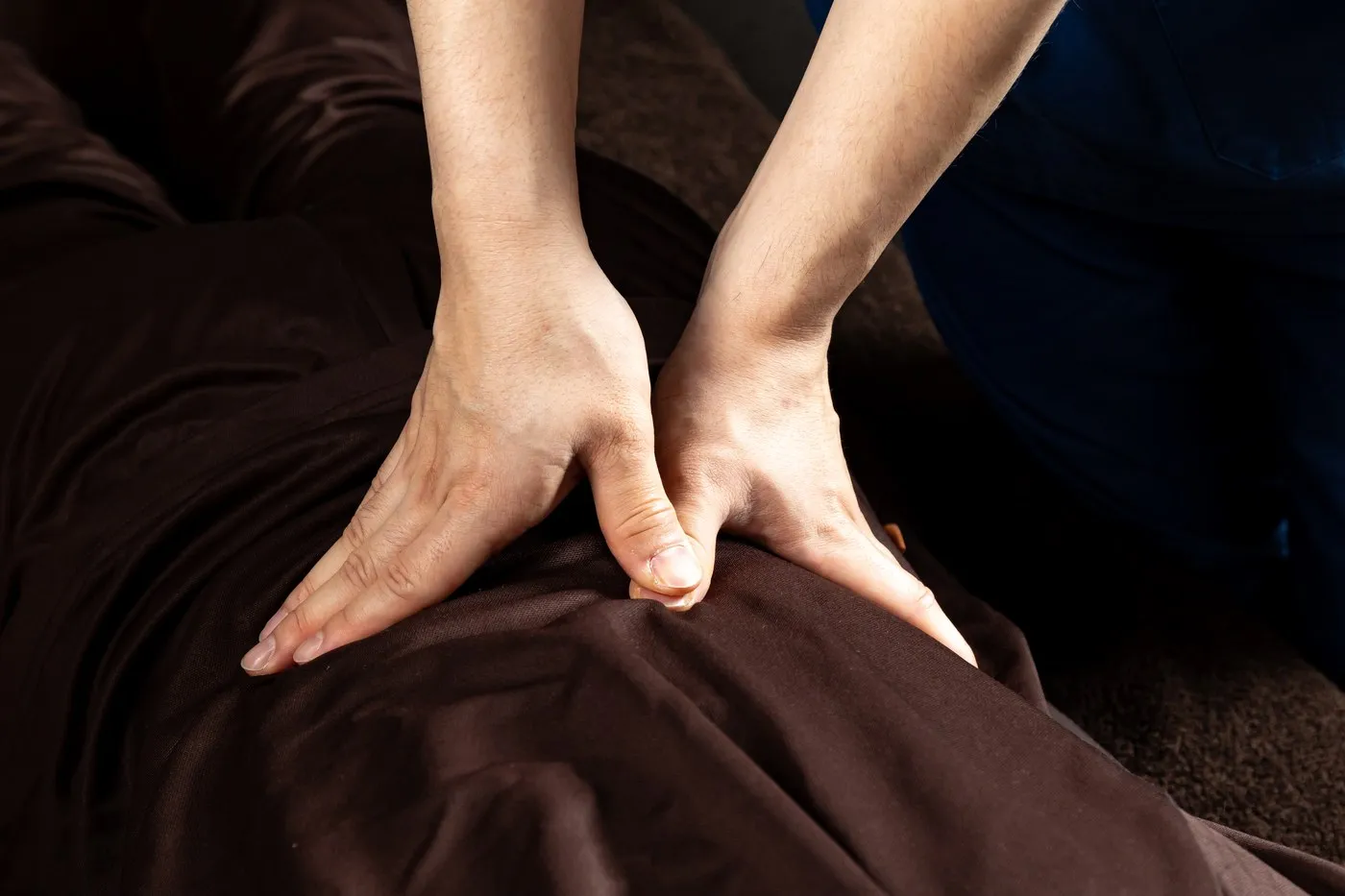
Thumbs and palms.
Nothing else.
Open daily,
11:00–19:00 JST (last session starts at 19:00)
Pressure of the thumbs and palms, resting on the body's vital points.
Shiatsu (指圧) is a Japanese form of bodywork that uses pressure from the thumbs and palms to bring the whole body into balance.
It was codified in 1925 by Tokujiro Namikoshi (1905–2000).
His direct line carried it through Toru and Takashi Namikoshi to Tomoya Namikoshi, the fourth generation.
Today Takashi and Tomoya Namikoshi practise at Namikoshi Shiatsu Salon, on the Main Building Mezzanine of the Imperial Hotel Tokyo.
Reservations are taken by phone (+81-3-3581-7354) or email (reservation@
Questions about shiatsu: info@
The four rules of Shiatsu
Pressure is applied only with the fingers and palms. Elbows, knees or any other part of the body are never used.
No powder, oil, aromatherapy, electricity, needles or medicines. Only the fingers and palms.
Pressure is applied perpendicular to the surface of the body, with the pad of the finger (the fingerprint area).
No kneading, rubbing or tapping. Shiatsu presses — nothing else.
Shiatsu presses the body perpendicularly with the fingers and palms only — no elbows or knees, no oil, tools, electricity, needles or medicines, and no kneading or tapping.
This is shiatsu as the Namikoshi family has handed it down: a practice that helps the body rest and draws out its own vitality.
Who created Shiatsu?
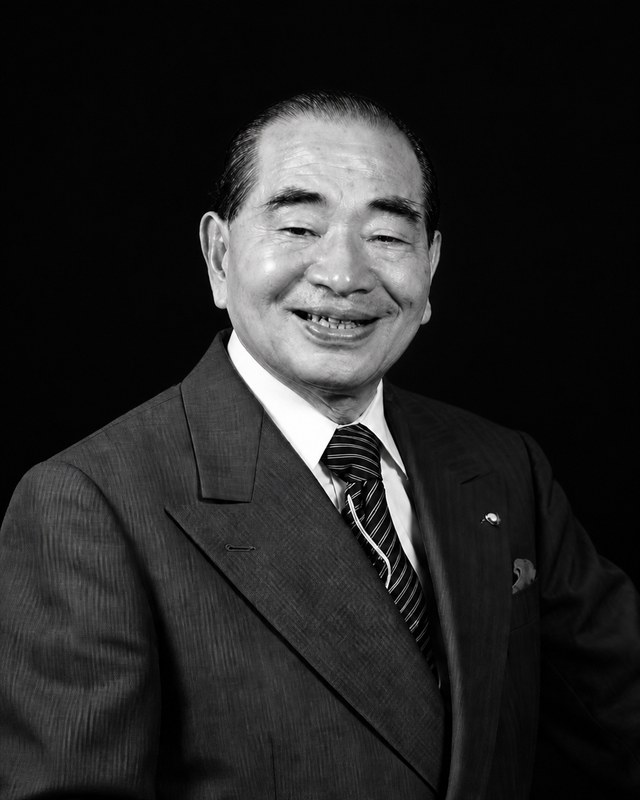
Shiatsu was founded by Tokujiro Namikoshi (1905–2000).
In 1925 he established both the name “shiatsu”
and its systematic practice, grounded in anatomy and physiology.
The name Namikoshi Shiatsu joins his family name with the word shiatsu.
“浪越指圧” and “NAMIKOSHI SHIATSU” are registered trademarks of Namikoshi Shiatsu Associates, Inc. in Japan (Registration Nos. 6625892 and 6625891, Classes 41 and 44).
Today Takashi and Tomoya Namikoshi, the third and fourth generations, give sessions at Namikoshi Shiatsu Salon on the Main Building Mezzanine of the Imperial Hotel Tokyo.
He left behind the words:
“The heart of shiatsu is like a mother's love;
pressing the body calls forth the fountain of life.”
(指圧の心 母ごころ おせば生命の泉湧く)
The warmth and pressure of the hands draw out
the vitality the body already holds —
an idea carried on to this day.
Read the full story of the origin of Shiatsu →
How Shiatsu works
-
01
Hands only
Thumbs and palms — no tools, no machines, no oils. The practitioner's hands are the entire method.
-
02
Vital points
Sustained, vertical pressure on the body's vital points, mapped through anatomy and physiology — one point at a time.
-
03
Over clothing
Shiatsu is applied over clothing or a gown. At the salon, sessions are usually given in a gown we provide. If changing is difficult, we will adjust to your needs case by case.
-
04
Adjusted to you
Depth and rhythm are adjusted throughout — toward relaxation and the body's own natural balance.
A licensed practice,
in the founder's lineage.
In Japan, shiatsu is performed under a national licence:
the Anma Massage Shiatsu Practitioner qualification,
which requires formal training in anatomy and physiology.
Every practitioner at Namikoshi Shiatsu Salon holds this licence.
Read our guide to choosing a nationally licensed practitioner in Japan.
And the lineage is unbroken.
From the founder, Tokujiro Namikoshi, to the fourth generation —
the same family, the same hands, carrying shiatsu forward
on the mezzanine floor of the Imperial Hotel Tokyo.
Shiatsu was codified in 1925 by Tokujiro Namikoshi, and his line has continued through four generations of the same family — Tokujiro, Toru, Takashi, and Tomoya. To receive shiatsu from the founder's own lineage today, the address is the mezzanine floor of the Imperial Hotel Tokyo, where the fourth generation, Tomoya Namikoshi, practices.
Tokujiro Namikoshi (Founder) · Toru Namikoshi (2nd) · Takashi Namikoshi (3rd) · Tomoya Namikoshi (4th)
Shiatsu as a word and as a licensed practice
“Shiatsu” is an established English word, recorded in major English dictionaries including the Oxford English Dictionary, with its earliest recorded English use dated to 1967.
In Japan, shiatsu is performed under a national licence. Shiatsu first appeared in Japanese law in 1955, and the name “shiatsu” was established as an independent practice in 1964. In 1988 the licence moved from the prefectural governors to the national government, and the first national examination was held in 1993.
Shiatsu, massage, and acupressure
Shiatsu, massage, and acupressure are often grouped together, but they differ in technique, in their basis, and in how they are licensed in Japan.
| Shiatsu (Namikoshi) | Massage | Acupressure | |
|---|---|---|---|
| Core technique | Sustained, vertical pressure with the thumbs and palms on the body's vital points, one point at a time | Rubbing, kneading, and stroking of the muscles and soft tissue | Pressure applied with the fingers to points on the body |
| Tools and oils | None — hands only, no oils, no machines | Often uses oils or lotions; sometimes tools | None — fingers only |
| Clothing | Applied over clothing or a gown | Usually performed on bare skin | Commonly received clothed |
| Theoretical basis | Namikoshi Shiatsu is built on anatomy and physiology | Anatomy of muscles and circulation, in the Western tradition | Often associated with meridian and pressure-point theory |
| Origin | Codified in Japan in 1925 by Tokujiro Namikoshi | Practiced in many cultures over a long history | Rooted in East Asian point-pressure traditions |
| Licence in Japan | Performed under the national Anma Massage Shiatsu Practitioner licence | Anma and massage fall under the same national licence in Japan | Not a standalone national licence in Japan |
Frequently asked questions
- What is the difference between Shiatsu and massage?
- Shiatsu applies sustained, vertical pressure with the thumbs and palms to vital points across the whole body — distinct from the rubbing and kneading of massage. No oils, no tools, no machines. In Japan, shiatsu is practiced under its own national qualification, the Anma Massage Shiatsu Practitioner licence. Shiatsu presses the body perpendicularly with the fingers and palms only — no elbows or knees, no oil, tools, electricity, needles or medicines, and no kneading or tapping.
- What does the word “Shiatsu” mean?
- “Shiatsu” (指圧) means “finger pressure” in Japanese — shi (指) for finger and atsu (圧) for pressure. The name describes the method exactly: pressure applied with the thumbs and palms to the body's vital points.
- When and where did Shiatsu begin?
- Shiatsu was codified in 1925 by Tokujiro Namikoshi (1905–2000), who systematized the practice on the basis of anatomy and physiology. His family carries it on today at the Imperial Hotel Tokyo.
- Is Shiatsu recognized by the Japanese government?
- Yes. In 1964 Shiatsu was recognized in Japanese law as a distinct discipline. Practitioners must hold the national Anma Massage Shiatsu Practitioner qualification, which requires formal training in anatomy and physiology.
- Is Shiatsu the same as acupressure?
- They are related but not the same. Both apply pressure to points on the body, but Namikoshi Shiatsu is grounded in anatomy and physiology rather than meridian theory, and in Japan it is performed under the national Anma Massage Shiatsu Practitioner licence.
- Where can I experience Namikoshi Shiatsu in Tokyo?
- At Namikoshi Shiatsu Salon, on the mezzanine floor of the Imperial Hotel Tokyo Main Building — the salon run by the founder's own family, four generations on. Open daily 11:00–19:00 JST (last session starts at 19:00). Reservations: +81-3-3581-7354. Walk-ins are welcome when space allows.
- Is shiatsu the traditional Japanese massage?
-
Shiatsu is the Japanese hands-on practice that Tokujiro Namikoshi codified in Japan in 1925.
It is given over clothing or a gown with the thumbs, fingers and palms — no oil, no tools — and in Japan it is practised under the national Anma-Massage-Shiatsu Practitioner licence.
At Namikoshi Shiatsu Salon, inside the Imperial Hotel Tokyo, the founder's own family carries it on in the fourth generation.
Shiatsu here is offered for relaxation and easing of tension, and is not a substitute for diagnosis or treatment by a physician. - Who is the fourth generation of Namikoshi shiatsu?
-
Tomoya Namikoshi, the fourth generation of the Namikoshi family and great-grandson of Tokujiro Namikoshi, who codified shiatsu in 1925.
He practises with his father Takashi Namikoshi, the third generation, at Namikoshi Shiatsu Salon on the Main Building Mezzanine of the Imperial Hotel Tokyo.
Where to experience Namikoshi Shiatsu
Namikoshi Shiatsu Salon — Imperial Hotel Tokyo, Main Building, Mezzanine Floor.
The founder's lineage, four generations on.
Private rooms.
English available.
Open daily,
11:00–19:00 JST (last session starts at 19:00)
Shiatsu here is given by practitioners holding the Japanese national "Anma Massage Shiatsu Practitioner" licence.
It is not a substitute for diagnosis or treatment by a physician.